Premiere: March 31, 2026 Country of origin:USA Director:Ryan Cavalline Writer:Ryan Cavalline Production Companies: Legend Hunters Films Distributed: Legend Hunters Films Genre:Fantasy, Horror, Grindhouse Runtime:1h 33min Starring:Peter Blessel, Nikki Carlson, Tommy Cooper
Some
films connect, some films do not.
Some invite you in, some push
you away.
Some feel effortless, some feel heavy in ways that are
hard to define. That is part of what makes cinema interesting in
the first place.
In 2021 came Myths & Mutants, written and directed by
Ryan Cavalline. I started watching it with curiosity, but it did not
fully work for me. It presents itself as a kind of fake documentary
about Myths & Mutants in Pennsylvania, but I struggled to stay
engaged.
I tend to enjoy mockumentary style films, like Gummo (1997)
or Forgotten Silver (1995), where the format creates something
layered or unexpected. This one did not quite reach me in the same
way. It might connect more with viewers familiar with Pennsylvania or
more invested in its specific setting and tone.
This year 2026 came the follow up, Myths & Mutants 2: Slaughter
Grindhouse Edition.
Yes, “Grindhouse Edition” is part
of the actual title.
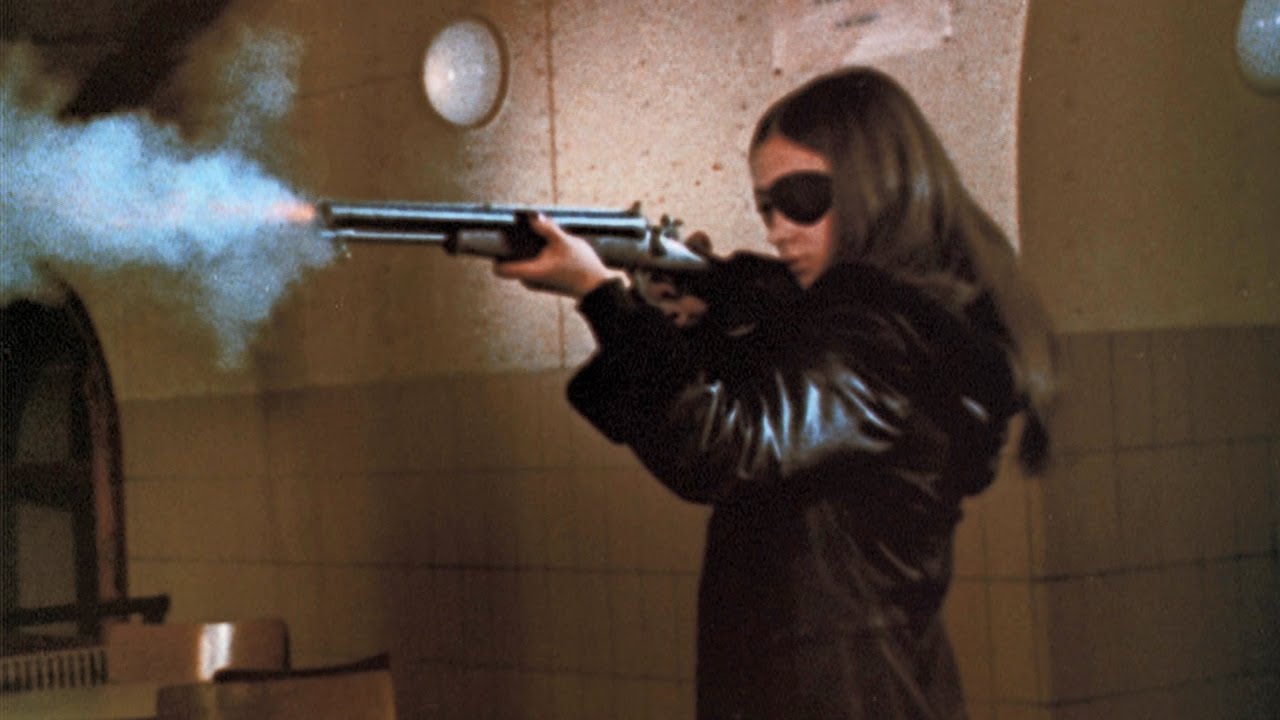
Thriller: A Cruel Picture (1973)
The poster immediately leans into a gritty, dirty visual style,
clearly aiming for an exploitation inspired aesthetic. Like old kung
fu films, damaged film prints, missing frames, burn marks, heavy
grain. The kind of texture associated with underground genre cinema,
where imperfection is part of the language.
The Karate Killer (1973)
Grindhouse itself was originally not an art movement, but inspired by films shown in cheap theaters. Often exploitation films that
pushed boundaries in violence, nudity and shock value. Over time it
evolved into a visual language of its own, later influencing
filmmakers like Quentin Tarantino, who revisited that aesthetic in a
modern context.
They Call Her… Cleopatra Wong (1978)
At the start of Myths & Mutants 2, the creators include a kind of dictionary style definition of
the words myth, mutants, and grindhouse.
The first story,
Hans Trapp: The Cannibal Scarecrow, presents a folktale that
at times feels inspired by figures such as Dracula and Elizabeth
Bathory. Hans Trapp is portrayed as a greedy ruler living in a
castle atop a hill who makes a deal with the devil and develops a
thirst for human blood. As expected, such bargains come with
consequences and Hans Trapp soon transforms into a relentless
killer.
In the present timeline of the story, he moves through the world
wearing a scarecrow mask, wandering through nature and killing anyone
he encounters. He also appears to have a connection to the
surrounding environment, with an ability to influence and manipulate
vines, using them to trap and restrain people.
At the same time, we
also follow a radio host trying to track down the truth behind the
legend, attempting to uncover whether Hans Trapp is real. A kind of
hunt for a story that may very well become lethal in itself.
In some ways, this reminded me of In a Violent Nature,
where long stretches of quiet movement in natural surroundings are
broken up by sudden bursts of extreme violence.
Some of the gore effects were genuinely impressive, while others
were less convincing. What pulled me out of the experience, however,
was something much more specific.
Having worked in some cinemas and having a fair understanding of how
film projection works, I found myself distracted by the artificial
film damage effects. Real film damage, frame jumps, scratches, or
burn marks happen for specific reasons. I still remember the first
time I saw a frame begin to burn in a projector. For a brief moment,
I thought the projector itself had caught fire.
Because of that background, I struggled with the way the film
mixed pristine digital imagery, modern visual effects, 4K quality,
random scratches, static and damaged frames. To me, the effect felt
inconsistent rather than authentic. That was clearly an artistic
choice by the filmmakers, perhaps intended to create a certain
atmosphere rather than accurately recreate a grindhouse print.
Unfortunately, my own experience kept pulling me back to how these
things would actually appear on film, making it harder for me to
become immersed in the story.
Between the two segments, there is also an intermission presented in
the form of a trailer for a fictional film titled Jesus Christ vs
the Evil Clown from Dimension X – Vol 1.
It is exactly what it sounds like, a campy, over the top concept
that leans heavily into 1970s style exploitation humor. Jesus Christ
facing off against an alien clown figure, somewhere between science
fiction chaos and horror parody. There is also a clear inspiration
from Killer Klowns from Outer Space (1988) in its tone and visual
absurdity.
In a way, this short trailer is one of the more consistent
examples of the film’s grindhouse identity. It fully commits to the
style without hesitation. It is a shame it was only a trailer rather
than a full feature, because it had a strong sense of direction
within its own campy framework.
The second story is called The Legend of the Pigman.
It is said a family was involved in an accident and now still
moves around the borders of the farm, carving through the land. The
warning is simple: stay away from that place.
This segment feels more grounded in its setup. There is a clearer
motive from the beginning, following a man searching for a girl who
is already shown early on to have been killed. Because of that, it
follows a more traditional narrative flow compared to the first
story.
At the same time, it still carries the same stylistic elements,
with occasional missing frames and that familiar grindhouse texture.
In terms of influence, it clearly draws from films like The Hills
Have Eyes (1977), The Texas Chainsaw Massacre (1974) and Wrong
Turn (2002). The killer is a masked figure in a pig mask, armed with a
chainsaw, though he is not alone.
Compared to the first segment, this one felt easier to follow. The
first story was more difficult for me to sit through, while this one
felt slightly more controlled in its pacing and tone, even if the
violence was still present and often quite graphic. Overall, it leans
more toward a crime-like structure than a mythological one.
I guess I am more on the “mutants” side
than the myth side when it comes to this kind of film language. Sadly, it did not fully work for me. I enjoy grindhouse style
films, but this one did not quite land in the way I hoped. Still was somewhat fun to check it out, some of the gore was fun.
A day of small spaces, shifting realities and shared film moments.
The third edition of Day of the Visionaries took place this day.
Final preparations were completed just in time before arrival. Three
people at setup, with a few additional guests arriving shortly after. A sound check was done using random K pop playback, which
confirmed that the audio system worked correctly. The program
featured works from Sweden, Japan, Spain and Azerbaijan, along with a
David Lynch inspired lottery segment, drinks, candy and pizza.
Everything was ready.
Film 1: Doften av ett band - (SMELLSCAPE) - (2026, Sweden) By Mattias Eliasson Length: 1h
After a short introduction by Mattias, That you can watch here:
Now everything was set in
motion and the day opened with the first film. The film is a music
documentary focusing on a punk/hardcore band. Going in, the
expectation was a straightforward portrait of a band and its music.
What unfolds instead moves in a different direction.
While rehearsals, performances and live moments are present, the
film gradually shifts toward the personal lives behind the music. The
members appear as middle aged musicians balancing work, family and
everyday responsibilities while still trying to keep the band active.
This shift creates a slower, more reflective tone than a
conventional music documentary. As it progresses, the identity of the
band becomes less central and attention moves toward relationships,
persistence and the reality of sustaining creative work over time.
After the viewing, there was some discussion about the band’s
name, which is not clearly stated in the film. Some visual cues
appear in rehearsal spaces and locations, but nothing fully confirms
it during the film itself, what any of us noticed anyway.
Later research suggests the band is called
Shitsame, a local group connected to Vimmerby, Hultsfred and
Stockholm.
Overall rating: 6/10 The documentary leaves a thoughtful impression. It does not
function as a straightforward band portrait, instead leaning into
ambiguity and everyday realism, which invites reflection rather than
clear conclusions.
Film 2: Notch: Ep 04 - Mabito (2025, Japan) By: James
Webb Length: 23min
First we got a Statement from the group explaining there idea of
there anthology show Notch. This focus shifted now to Japan, featuring a short film titled Mabito from an
anthology project associated with a group using the name James
Webb.
Here the tech started messing, after the file I had
downloaded from YouTube started to lag for some reason, we looked at
it on YouTube, that worked fine.
The story follows a unit of soldiers moving through a forest
during the Second World War. What begins as a straightforward wartime
setting gradually introduces a more uncertain presence within the
environment. The forest feels active in a way that goes beyond
geography, suggesting something unseen moving alongside the group.
The film relies heavily on atmosphere. Sound design plays a major role in shaping tension, using
subtle environmental audio to build a sense of unease. The visual
approach is restrained, with attention to movement through space and
the gradual build of psychological pressure.
A comparison can be drawn to Deathwatch (2002), particularly in
how isolation and fear develop inside a hostile environment. Both
films use enclosed natural spaces as a form of psychological trap,
where the real threat is never fully defined.
Overall rating: 8/10 Mabito stands out through its controlled pacing and strong
technical execution. The cinematography supports the mood
effectively, with a consistent focus on distance, silence and
uncertainty.
Film 3: Videohead (2026, Sweden)
By - Robin
Andersson Length: 8min
The third film began with an extended introduction from
director Robin Andersson, who framed the short as a tribute to the
videocassette format and its cultural influence. The presentation set
up expectations of a retro inspired experience centered on analog
media and physical tapes. Watch his introduction here:
The film follows a young woman who receives a mysterious cassette.
From there, the narrative moves into increasingly unstable territory,
blending experimental horror elements with a stylized retro
aesthetic. The tone leans into 1980s inspired visual language, where
analog texture, distortion and mood driven pacing take priority over
conventional structure.
Partway through the screening, playback was interrupted due to a
technical file issue. The film could not continue normally at that
moment, which forced an early stop in the viewing. This created an
unintended break that left the audience with an incomplete first
impression. At that moment I did not know it existed on YouTube also.
This was the last frame that was seen at the event from this short sadly.
Later, the remaining portion was viewed separately for this blog article. The second
half escalates into more chaotic and surreal territory, pushing
further into experimental horror and fragmented narrative structure.
The transition from the earlier section to this part feels abrupt,
almost as if the film deliberately abandons coherence in favor of
tonal expression and visual experimentation.
There is a noticeable shift between the more grounded opening and
the later abstract progression, which gives the film a dual identity.
The initial stopping point would have worked as a strange but
contained conclusion, while the full version expands into something
more unpredictable and unrestrained.
At moments it lands in a strange space somewhere between Ringu
(1998) and Darkman (1990) energy, where familiar horror logic
dissolves into something more distorted and reactive.
Overall rating: 6/10 A playful, experimental work that
embraces imperfection and ambiguity, with a strong emphasis on sound
design and visual atmosphere rather than narrative clarity.
Robin
also help me write some of the reviews here that you might have seen.
Check out his own site here: https://filmfett.wordpress.com/
Film 4: NO ME SUELTES (Don’t Let Me Go) - (2025, Spain)
By: Lia Montsu Length: 5min
Next film is from Spain, created by film student Lia
Montsu. The
short is inspired by a visual reference from Junji Ito’s
manga The Long Hair in the Attic(1988).
Maybe this panel.
The film presents a simple but striking scenario. A young woman
appears trapped, her hair physically bound to a wall, while another
woman attempts to help her escape. The setup is minimal, but the
emotional weight is carried through movement, framing and atmosphere
rather than dialogue.
Shot in black and white, the film develops a timeless quality that
enhances its poetic tone. The visual choice removes distractions and
places full focus on texture, contrast and physical tension within
the frame. The result is a piece that feels closer to a moving
illustration than a traditional narrative short.
What stands out most is the restraint. The concept is not expanded
into explanation or background, but instead allowed to exist as a
fragment of a larger implied world. This creates a lingering effect
after viewing, where the situation continues to resonate without
clear resolution.
Overall rating: 6/10 There is a sense that this material could support a longer form
adaptation, where the emotional and symbolic elements could be
expanded further. Even in short form, it leaves a strong impression
through its visual simplicity and thematic focus.
The atmosphere shifted into
something more informal and relaxed compared to the screenings
earlier.
The segment was a lottery draw by David Lynch. A YouTube playlist
he had created during the pandemic. Random selection turning it into
a kind of unpredictable draw mechanism. Numbers were pulled in sequence from this setup, the process was
simple but carried a sense of anticipation because of its completely
random nature.
What happened during the draw was crazy. The number 10 appeared
three times in a row, so the all the prize ended up going to a single
participant that by luck had this numbers as wining numbers. That was an unplanned twist.
Here the program paused for a short break. The timing landed well, giving
space to reset before moving into the later part of the evening. Food
arrived from Dana Pizzeria, which added a welcome change of pace to
the screening. The delivery turned into a shared moment. Thanks so
much to Dana Pizzeria for sponsoring this event, it helps a lot.
Taste good too.
Film 5: Aporia Kiyamet Deneyi (Doomsday Experience) - (2019, Azerbaijan)
by Rec Raven Length: 1h 26min
The final film of the evening brought the audience into a
part of world cinema rarely represented, a
horror film from Azerbaijan directed by Rec Raven. Title roughly
translates to “Doomsday Experience”
Part of the fascination surrounding the film came from simply
experiencing a movie from a country many viewers knew very little
about. Several attendees were unsure where Azerbaijan was
geographically located, which became part of the discussion
surrounding the film itself. The country sits west of the Caspian
Sea, below Russia and above Iran, positioned in a region that rarely
reaches international horror audiences.
The version screened at the event had been dubbed into Turkish,
reportedly to help the film reach a larger market.
The story follows a group of people taken hostage under brutal
circumstances. During an attempted escape, two characters end up
trapped inside a long narrow pit/ bunker, where much of the film then
unfolds. From that point onward, the narrative transforms into a
confined survival horror story focused on desperation, fear, and the
struggle to escape.
One of the film’s strengths is how it maintains tension despite
the limited environment. Creating atmosphere and momentum in a single
confined location is difficult even in short films, yet this
production manages to sustain interest across a full feature length
runtime. The hostage scenes are intense and at times extremely
brutal, adding a harsh realism to the horror elements.
The film also contains several effective gore effects that help
reinforce the physical danger surrounding the characters. Rather than
relying purely on shock, the horror grows from the feeling of
entrapment and uncertainty.
Overall rating: 6/10 for intensity, confined storytelling and the
uniqueness of seeing horror cinema from Azerbaijan.
Another thing that was happening in the shadows of the event was this camera was making a round around the area, it is an anti digital camera, that is digital, but you can not see on the back what photo was taken, it has no display, all is saved on a memory card for viewing later. I am in the making of a longer article about it so stay tuned for that. Not so many photos was taken sadly, but here are some that was taken at the event by those attending.
One thing I like with this camera is the 90´s era felling over it.
THE END
The throughline becomes surprisingly clear when looking back at the
program as a whole. Even without planning it, the selection of films
ends up circling the idea of confinement in different forms.
The opening documentary places its focus inside a limited social
space, where the “band” exists less as a public identity and more
as a small, contained struggle to keep something alive within
everyday life. The Japanese short pushes that idea into a physical
environment, where movement through a forest becomes a controlled,
enclosed experience shaped by unseen pressure.
The Swedish short takes confinement into a more stylized
direction, narrowing everything into a single object and perspective,
almost like a sealed narrative space where meaning has to be
extracted from limited fragments. The Spanish film reduces it even
further, holding the entire emotional weight inside one static
situation, a single visual problem that never expands outward.
The feature film from Azerbaijan, then pushes confinement into its most literal
form, trapping its characters inside an underground space where
survival and tension are built entirely from restriction. Even the
closing lottery segment, shaped through David Lynch inspired
randomness during a period of isolation, fits into the same pattern
of constrained conditions producing unpredictable outcomes.
Seen together, the program starts to feel less like a collection
of unrelated works and more like variations on a shared condition:
people, spaces, or ideas placed under limits and forced to evolve
within them.
Against that, the presence of the Paper Shoot camera becomes
almost the opposite gesture. It moves freely through the room,
capturing moments outside the films themselves, outside the
structured confinement of the screenings. It acts like a small breach
in the concept, documenting the people watching the constraints
rather than the constraints themselves.
That contrast gives the evening its final shape. The films explore
restriction from different angles, while the camera quietly records
what exists beyond that shared frame.
Overall an okay event for it being on a Sunday. Next event is planed for Nov, let´s see how that goes.
Thanks to : Studiförbundet Vuxenskolan Dana Pizzeria Direkten Nöje
Then also thanks to those that attended the event this time.

.png)
.png)