Showing posts with label Psychological Drama. Show all posts

Friday, July 24, 2026

Movie: Ganja & Hess (1973)

Premiere: 1973
Country of origin:USA
Director:  Bill Gunn
Writer: Bill Gunn
Production Companies: Kelly/Jordan Enterprises
Genre: Supernatural, Psychological Drama, Experimental Horror
Runtime: 1h 52min
Starring: Duane Jones, Marlene Clark

When people hear the name Duane Jones, many will immediately think of one film: George A. Romero's Night of the Living Dead (1968). His performance as Ben made him one of the most memorable faces of independent horror cinema, even though he never became a major Hollywood star.


Duane Jones in Night of the Living Dead (1968)

After Night of the Living Dead, Jones did not appear in a large number of films. His second movie role after Romero's classic was a very different kind of horror film. Ganja & Hess (1973).

This is a fascinating and unusual film that has spent decades being misunderstood. Originally released as Ganja & Hess, the film was later re-edited and released under different titles, including Blood Couple and Double Possession. These alternate versions changed the way the film was presented and pushed it closer toward the blaxploitation market. The original vision was never fully appreciated at the time.

Although the film struggled to find its audience at the time, its influence continued. Decades later, Spike Lee revisited the story with Da Sweet Blood of Jesus (2014), a modern reinterpretation of Bill Gunn's film. While it takes the story in its own direction, it shows that the ideas and themes of Ganja & Hess continued to inspire filmmakers long after its original release.

I was curious to watch this film because of Duane Jones. What I found was not a typical vampire movie, but something much stranger, a slow, dream-like, psychological film about blood, addiction, religion, loneliness and the search for connection.


The film opens with text explaining the strange history of Dr. Hess. He is an anthropologist and geologist who studied the ancient civilization of Myrthia. During his research, he encountered an ancient ritual and was stabbed three times with a ceremonial dagger, leaving him cursed with a strange form of immortality.

The story is introduced by Reverend Luther Williams, who tells us about Dr. Hess and his unusual condition. Hess is a man who cannot die, but his existence comes with a terrible addiction for blood.

Dr. Hess (Duane Jones) a very different kind of horror character, one that is less about fear and more about the dark loneliness. Later, Hess meets Ganja (Marlene Clark) and this is where the film truly starts to take hold. What follows is a slow-moving, dream-like vampire journey that is less interested in traditional storytelling and more focused on atmosphere, emotions and ideas.

The film often feels like it enters a trance. Scenes are allowed to breathe, conversations continue without rushing toward a clear goal, and the supernatural is treated almost like a natural part of this strange world, much like in the old Dark Shadows (1966) television series, where supernatural events simply exist as part of everyday life. It does not constantly explain itself. Instead, it creates a mood and lets the viewer try to understand what they are experiencing.

At times, this also reminded me of the raw, personal feeling found in films like Der Fan (1983) and The Man Who Fell to Earth (1976). Not because the stories are similar, but because they share the feeling of filmmakers following their own inner vision rather than the usual rules of how a movie is expected to work.


This can be both fascinating and challenging. There are moments where the film feels completely unique, as if it exists outside normal movie structure. At the same time, the lack of traditional guidance can leave the viewer feeling lost, as if the story makes perfect sense inside the mind of the filmmaker but requires the audience to find their own way into it.


The music adds greatly to this experience. The soundtrack is unusual, with strange choir-like sounds, harsh textures, and almost ritualistic noises that make the film feel ancient and spiritual. It does not simply tell the audience when to be scared. Instead, it creates an atmosphere that feels mysterious, unsettling, and sometimes almost hypnotic. But there is something very special about it. Bill Gunn created a film that feels completely personal that feels more like a dream than a traditional story.

Duane Jones gives a very different performance from his famous role in Night of the Living Dead. Here he plays Hess as a tragic and lonely figure, someone who has gained eternal life but lost something human along the way. Marlene Clark also brings a fascinating presence to Ganja. She is not simply a victim or a supporting character. Her relationship with Hess becomes one of the most interesting parts of the film, adding another layer to the themes of love, transformation, and loneliness.

This is not a perfect film, but it is a memorable one. It has a raw and unusual style that can be frustrating, but also fascinating. Even when it loses focus, it still feels like there is a real vision behind every strange choice.

Rating: 6/10

A flawed but unforgettable piece of experimental horror cinema.


IMDB:
https://www.youtube.com/watch?v=mHl544NJwD0

Trailer:


Wednesday, July 15, 2026

Movie: Written in the Light (2026)

Premiere: 2026
Country of origin:USA
Director:  Heidi Mikac, Caitlin Skinner
Writer: Heidi Mikac, Caitlin Skinner
Production Companies: Flick Street Productions, Heidi Mikac Films
Distributor:Heidi Mikac Films
Genre: Psychological Drama
Runtime: 1h 28min
Starring: Heidi Mikac, Caitlin Skinner

Finally, I got the chance to see a movie by Heidi Mikac. I have seen many of her posts on social media as I have followed some of her projects, so I was very curious to finally watch one of her films.

Written in the Light is a powerful and deeply sad movie. The story begins with Skyler losing her father, an event that sets everything in motion. The movie is about grief and how people deal with a loss that feels impossible to process.

Skyler already struggled with eating problems before her father's death, but after the loss, everything starts spiraling into dangerous territory. Watching her struggle with pain, confusion and self-destruction was genuinely difficult. The movie does a good job showing that grief does not always look the same for everyone. Sometimes it turns inward and becomes something much darker.

The mother is also an important part of the story. She is trying everything she can to protect her daughter while also dealing with her own pain. It creates a very emotional situation where you can feel that everyone involved is trying their best, even when there are no easy answers. 


Skyler is played by Heidi Mikac herself, who is also the writer and director of the film together with Caitlin Skinner, who plays Skyler's mother. Both performances help sell the emotional weight of the story. The movie feels very personal, almost like you are watching someone go through a real struggle rather than just following a fictional character.

There was also something nostalgic and melancholic about the film. It reminded me of the kind of dramatic television movies that were shown when I was younger. At the same time, Written in the Light has some surreal moments that add a more unsettling feeling. Some scenes are almost dreamlike, but they also become frightening because they show what is happening inside Skyler's mind.

As the movie continues, it goes deeper and deeper into despair. The emotional darkness starts moving into the same territory as Requiem for a Dream (2000). This is not a lighthearted movie. It is a difficult watch that wants you to sit with uncomfortable feelings.

The reason this movie affected me so much is because the story feels very close to reality. I have my own experience with losing my father, sadly to cancer, something that is still difficult for me to deal with. I have also worked with young people who have struggled with similar problems shown in the film. Because of that, this story never felt like just fiction. It felt real. The pain, the confusion and the struggle felt like something that could happen to someone around us. This was a movie I could feel in my soul.

Written in the Light was created through an Indiegogo crowdfunding campaign by Heidi Mikac. The campaign raised $1,212 from 24 backers toward a $15,000 goal. I do not have information about whether additional funding was collected through other sources.

One thing I liked about the campaign was the way backers could become part of the movie. The perks included things like signed physical editions of the DVD or Blu-ray, signed posters, having your photo appear in the movie, name mentions in the credits, voiceover roles and walk-on roles.

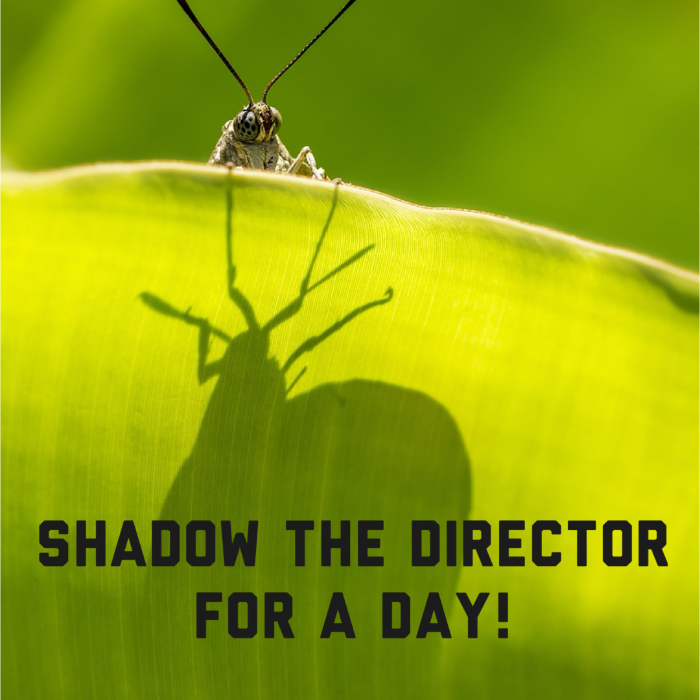
I like when independent filmmakers find ways to include supporters in the creation process. It creates a stronger connection between the audience and the film. There were also some fun and unusual perks. I noticed some rewards included merchandise from other movies, such as posters and even a Home Alone cup, which was a little unexpected but also kind of charming. One perk that caught my attention was "shadow the director for one day". I assume this meant spending time following the director and seeing how the filmmaking process works behind the scenes. For aspiring filmmakers, that kind of experience could probably be very interesting.

https://cdn.images.indiegogo.com/productimage/projects/56010/29135d88-c97a-410e-a213-8b90b0833cd0.png

Written in the Light is not an easy movie, but it is a meaningful one. It is a story about grief, pain and the struggle to find a way forward when life changes forever.

The movie stayed with me after the credits, not because it was trying to shock me, but because it felt honest. Sometimes the most powerful films are the ones that remind us of real human experiences.

A prequel is also in work called Written in the Dark.

https://scontent.farn2-2.fna.fbcdn.net/v/t39.30808-6/745963032_1895365418104902_7099854369599324626_n.jpg?stp=dst-jpg_tt6&cstp=mx1363x2048&ctp=p526x296&_nc_cat=108&ccb=1-7&_nc_sid=833d8c&_nc_ohc=VNpvgTYDfikQ7kNvwGE5OgO&_nc_oc=AdoC7YOvGT32TPyeCiQj7lT-1jMvl1cuq6CV7IbXYih5KW3Ia8Hsqa6OfEIhbIiHqPg&_nc_zt=23&_nc_ht=scontent.farn2-2.fna&_nc_gid=Hbf5G-1AWR_gaT8ykwJyVw&_nc_ss=7b2a8&oh=00_AQCNxueeVR94Mw_BSIErTFFoBOMn01sXRzGSbLXiicmdmQ&oe=6A5D66B4

7/10
For excellent performances and a strong sense of realism from the actors. The emotional struggle feels very believable, making the characters and their pain feel real rather than just like a movie story. I can definitely see this movie being shown in schools as a way to create awareness and start conversations about these difficult subjects.


Links:
IMDB: https://www.imdb.com/title/tt32252459
Original Indigogo: https://www.indiegogo.com/en/projects/heidimikac-37872580/written-in-the-light
Facebook: https://www.facebook.com/profile.php?id=61576241825482


Article written by: Sonny Mikszath


Friday, June 19, 2026

Movie: La rupture (1970)

(The Breach)

Premiere:
August 26, 1970
Country of origin: France, Italy, Belgium
Director: Claude Chabrol
Writer: 
Charlotte Armstrong, Claude Chabrol
Production Companies: 
Ciné Vog Films, Euro International Films, Les Films de la Boétie
Distributed: A.R.T.E.
Genre: Psychological Drama, Thriller
Runtime: 2h 4min
Starring: 
Stéphane Audran, Jean-Pierre Cassel, Jean-Claude Drouot, Michel Bouquet   


I randomly came across the streaming site A.R.T.E. (Association Relating to European Television), a European cultural platform that shares films, documentaries and curated programming for free. While browsing there I found this film and decided to watch it without knowing much in advance. I just found it interesting to randomly find a French film from 1970 there.

The film opens with a domestic rupture that already feels slightly out of rhythm with expectation. A violent incident involving Hélène (Stéphane Audran), her husband,Charles (Jean-Claude Drouot) and their child, this sets the tone, but even this moment is not framed in a fully conventional dramatic way. Emotional reactions feel slightly displaced and the scene carries an odd calm underneath its surface intensity. From the beginning, the film seems less interested in clarity and more interested in perception.

What follows is not a linear unfolding of events, but a gradual shift in where meaning sits. Hélène becomes the center of an attempt to influence the outcome, where her father in law, Ludovic (Michel Bouquet) brings in Mr. Thomas (Jean-Pierre Cassel) to construct a case against her. From there, Thomas gradually moves into a central focus position, sometimes even more present than Hélène.

A large part of the film takes place in a contained environment, a boarding house near the hospital becomes the main setting, where different lives overlap, observe each other and slowly affect one another. Over time, it takes on a quality similar to an Agatha Christie setup, not because of a classic mystery structure, but because of how contained it is and how much meaning comes from interaction rather than action.


Within this house, a small ecosystem of personalities forms. The Pinelli couple run the space, with the woman acting as the main social anchor while the man is more the janitor. Three gossiping women dominate much of the social rhythm, spending their time playing cards and exchanging judgments that quietly shape the atmosphere. 

An outspoken actor moves through the space with a louder presence, shifting attention whenever he enters a scene. A doctor connected to the nearby hospital appears in fragments, sometimes grounding events in a more factual register. Among them is Elise, a socially distant young woman who initially feels peripheral but gradually becomes drawn into the same network of influence and pressure.

In terms of tone, the film reminded me of works like Repulsion (1965) and Persona (1966) in the way identity and emotional stability feel unstable and hard to pin down. At the same time, the way information is revealed through small interactions and controlled framing gives the film a very particular flow. There is an unexpected ease in how people behave and speak, even when the situation underneath is tense or unclear. Combined with the slow, slightly mysterious unfolding of events, it creates a rhythm that oddly recalls The Adventures of Tintin, not in content, but in how straightforward interactions carry the story forward through movement, encounters and timing rather than explanation.

What stands out most is how the film trusts fragmentation. It rarely gives full answers in dialogue or exposition, instead letting meaning emerge through partial views, shifting context and what is left unsaid. Understanding is always slightly delayed and interpretation becomes part of watching rather than something done after the fact.

One of the most memorable tonal shifts comes with the scenes involving Elise, especially a sequence built around a 16mm projection of a very authentic looking erotic film, likely made by Thomas girlfriend that seems to be play an erotic actor. It appears almost out of nowhere and changes the atmosphere in a way that feels both unsettling, very dark and strangely detached. It is always interesting to see a film inside a film. The 16mm film was some erotic ritual short. 

It was an interesting experience following this manipulative thread and seeing where it leads, even as the perspective keeps shifting and certainty never fully settles. The film is well acted and the stakes are high, especially around a child’s future and a mother pushed into instability. That gives it a darker weight underneath the shifting social dynamics and interpretations. I enjoyed it,
7/10

Would had love to see that 16mm film separated in full. I found the ritual aspect of it adding an interesting layer.

Links:

Watch it on arte.tv - Available until 14/07/2026
https://www.arte.tv/en/videos/127428-000-A/the-breach/

IMDB
https://www.imdb.com/title/tt0066318

Check out this very interesting trailer, with clapperboard present. 


Article written by: Sonny Mikszath