Wednesday, July 29, 2026

Movie: He-eo-jil gyeol-sim (2022)

 (Decision to Leave)
Premiere: 2022
Country of origin: South Korea
Director: Park Chan-wook
Writer: Park Chan-wook, Chung Seo-kyung
Production Companies: CJ Entertainment,  Moho Film  
Genre: Thriller, Drama
Runtime: 2h 19min
Starring: Park Hae-il, Tang Wei

One thing I have always found fascinating about much of Asian cinema is how it often refuses to follow the same predictable structures that we are used to seeing in many mainstream films. The stories can move in unexpected directions, changing tone and emotion without feeling like they are following a strict formula. A film can be serious, funny, romantic and strange all at the same time, creating a balance that feels very human.

This is something that immediately stood out to me while watching. The film has the foundation of a detective mystery, but it is also a romance, a psychological drama and a study of obsession. It is a film where the question is not only about finding the truth, but also about understanding another person.

The story begins when a man is found dead after falling from a cliff. Detective Jang Hae-jun (Park Hae-il) is assigned to investigate whether it was an accident, suicide or murder. The man's wife, Seo-rae (Tang Wei), quickly becomes the main person of interest.

Seo-rae. A woman who seems calm, distant and almost impossible to place. There is something about the way she carries herself, something hidden behind every answer and every silence, making it impossible to decide whether she is someone to fear, someone to understand or simply someone who refuses to reveal herself.

The more Jang looks at her, the more she seems to become not just a person in the investigation, but a presence that follows his thoughts even when she is no longer there. A mystery that is no longer only about what she has done, but about why he feels so drawn toward understanding her. And somewhere in that search for answers, the detective begins to forget that he was supposed to be searching for a suspect, not someone he could never stop thinking about.

One of the most fascinating aspects of Jang's obsession is how deeply he studies Seo-rae. He watches her movements, studies her habits and tries to understand every small detail about her. Eventually, his investigation becomes so personal that he almost feels present in her life even when he is not there. The film beautifully visualizes this, showing his thoughts and imagination blending with reality, making it difficult to separate what he knows from what he only believes.


(In this scene, Jang is not physically present. He is there only in his imagination.)

Why does this person remain in his mind? Why does every small detail about her feel important? Why does finding the truth about her start to feel less like a duty and more like a need? A need I have to solve?

But the film never makes the simple assumption that someone being unusual means they are guilty. Instead, it creates a fascinating mystery around who Seo-rae really is and how much we can trust our own perception of another person.

At its core, the film is a story about a murder investigation, but it quickly becomes much more interested in the people involved than simply solving the crime. Detective Jang is determined to uncover the truth behind the man's death. He is a dedicated investigator who pays attention to every small detail, but his dedication also becomes his weakness.


When Seo-rae becomes the focus of the investigation, Jang finds himself increasingly fascinated by her. She is mysterious, difficult to read and does not behave like someone he expects. The more he studies her, the more involved he becomes, and the line between professional investigation and personal interest starts to disappear.

One thing I especially appreciated was how naturally the film changes its tone. It begins as a detective mystery, slowly transforms into a romance, becomes a psychological drama and even finds room for small moments of comedy before returning to the mystery once again. It is a style of storytelling I have often found in Asian cinema, where genres are allowed to blend together instead of being kept separate.

I also loved the film's cinematography. The framing, camera angles and visual storytelling constantly drew me into the characters' emotions, often telling just as much through a composition or a quiet movement as through the dialogue itself. 


The film rewards viewers who pay attention. A phone, a foot bath, a turtle, a watch or even a simple conversation may seem insignificant at first, but almost every detail returns with a purpose later on. Nothing feels accidental.

By the end, the greatest mystery is no longer the murder itself, but the people caught inside it. 

The two lead performances deserve special mention. Tang Wei, known internationally for her acclaimed and controversial role in Lust, Caution (2007), delivers a captivating performance as Seo-rae. She portrays a strong-minded woman whose emotions are often hidden beneath the surface, making every glance and every silence feel meaningful.


Opposite her, Park Hae-il, known from Memories of Murder (2003), The Host (2006) and War of the Arrows (2011), gives a wonderfully restrained performance as Detective Jang Hae-jun. He convincingly portrays a man slowly being pulled into a world he is desperately trying to make sense of, where professional duty and personal emotion become impossible to separate.

Rating: 9/10
It is a film you investigate and the deeper you look, the more you realize the biggest mystery was never the murder. It was the people.

IMDB:
https://www.imdb.com/title/tt12477480/


Saturday, July 25, 2026

Movie: Se, jie (2007)

(Lust, Caution)
Premiere: 2007
Country of origin: Taiwan, USA, Hong Kong, China
Director: Ang Lee
Writer: Eileen Chang, James Schamus, Hui-Ling Wang

Production Companies:
 
Haishang Films, Focus Features, River Road Entertainment, 
Sil-Metropole Organisation, Shanghai Film Group, Shanghai Film Group Corporation

Genre:
 Erotic, Thriller, Drama
Runtime: 2h 37min
Starring: Tony Leung Chiu-wai, Tang Wei

When Lust, Caution was released, it became one of the most controversial films of the 2000s. The film gained worldwide attention because of its explicit scenes, which led to censorship and different versions being released in different countries. The controversy also caused problems for the lead actress, Tang Wei. But behind the controversy is a much more complex and tragic story.

The film is based on the novella Se, Jie (Lust, Caution) (1979) by Chinese writer Eileen Chang. While the story is fictional, it was deeply influenced by Chang's own experiences of living through the Japanese occupation of Shanghai during World War II. The uncertainty, fear and moral compromises of that time shaped the world in which the story takes place.


One version of the book from 1979

The film begins like a spy thriller, but slowly transforms into something much more personal. It becomes a story about identity, manipulation, passion and the dangerous connection between two people who are both trapped by the roles they are forced to play. 


Set during the Japanese occupation of Shanghai during World War II, Lust, Caution follows Wang Jiazhi, a young woman who becomes part of a resistance group formed by university students with a background in theater. Their mission is to assassinate Mr. Yee, a Chinese official working with the Japanese occupation government. What begins as an act of deception becomes far more dangerous as Wang risks losing herself in the process.


Secrets, lies and performances become the foundation of their world.

One of the first things that stood out was the incredible recreation of the era. The clothing, the cars and the atmosphere of 1930s & 1940s Shanghai are beautifully created. The fact that they built such a large street set helps sell the feeling that we have truly entered another time period.

But underneath the spy story is a much deeper and more tragic story. It is about holding on to your beliefs and your mission, while also fighting against losing yourself. It is about passion, manipulation and the dangerous places where human emotions can take you.

The film's intimate scenes are certainly raw and intense, but they never feel like they exist only to shock the audience. They are not simply erotic moments, but an important part of the story that reveals the complicated relationship between Wang Jiazhi and Mr. Yee. There is desire, but also power, control and emotional conflict.

Tang Wei gives an incredible performance as Wang Jiazhi. Watching her character develop from a young theater student into someone carrying an impossible burden is devastating. She captures the painful transformation of a person who enters the role as part of a mission, only to become emotionally trapped inside it. The conflict between duty, identity and her own feelings is shown with incredible depth.

The role also came with a real-life cost for Tang Wei. After the film's release, she faced a ban from appearing in films in mainland China because of the controversy surrounding the movie. However, she later returned to acting and has since become one of the most respected and prominent actresses in Chinese cinema.

What makes her performance even more impressive is that Lust, Caution was one of her first major film roles. The emotional range and complexity she brings to Wang Jiazhi is remarkable, especially for such an early point in her career.

Tony Leung Chiu-wai gives Mr. Yee a commanding performance. Through his calm authority and controlled presence, he creates a character who feels powerful and intimidating, while still keeping a layer of mystery beneath the surface.

Lust, Caution is not a happy film. It is a dark story, but it is told with such realism and intensity that I found myself completely absorbed. During the most suspenseful moments, I felt transported into this world, which is something that is becoming harder to achieve with modern films.

Rating: 10/10
The combination of raw passion, darkness and psychological tension creates something unforgettable.

IMDB
https://www.imdb.com/title/tt0808357

Friday, July 24, 2026

Movie: Ganja & Hess (1973)

Premiere: 1973
Country of origin:USA
Director:  Bill Gunn
Writer: Bill Gunn
Production Companies: Kelly/Jordan Enterprises
Genre: Supernatural, Psychological Drama, Experimental Horror
Runtime: 1h 52min
Starring: Duane Jones, Marlene Clark

When people hear the name Duane Jones, many will immediately think of one film: George A. Romero's Night of the Living Dead (1968). His performance as Ben made him one of the most memorable faces of independent horror cinema, even though he never became a major Hollywood star.


Duane Jones in Night of the Living Dead (1968)

After Night of the Living Dead, Jones did not appear in a large number of films. His second movie role after Romero's classic was a very different kind of horror film. Ganja & Hess (1973).

This is a fascinating and unusual film that has spent decades being misunderstood. Originally released as Ganja & Hess, the film was later re-edited and released under different titles, including Blood Couple and Double Possession. These alternate versions changed the way the film was presented and pushed it closer toward the blaxploitation market. The original vision was never fully appreciated at the time.

Although the film struggled to find its audience at the time, its influence continued. Decades later, Spike Lee revisited the story with Da Sweet Blood of Jesus (2014), a modern reinterpretation of Bill Gunn's film. While it takes the story in its own direction, it shows that the ideas and themes of Ganja & Hess continued to inspire filmmakers long after its original release.

I was curious to watch this film because of Duane Jones. What I found was not a typical vampire movie, but something much stranger, a slow, dream-like, psychological film about blood, addiction, religion, loneliness and the search for connection.


The film opens with text explaining the strange history of Dr. Hess. He is an anthropologist and geologist who studied the ancient civilization of Myrthia. During his research, he encountered an ancient ritual and was stabbed three times with a ceremonial dagger, leaving him cursed with a strange form of immortality.

The story is introduced by Reverend Luther Williams, who tells us about Dr. Hess and his unusual condition. Hess is a man who cannot die, but his existence comes with a terrible addiction for blood.

Dr. Hess (Duane Jones) a very different kind of horror character, one that is less about fear and more about the dark loneliness. Later, Hess meets Ganja (Marlene Clark) and this is where the film truly starts to take hold. What follows is a slow-moving, dream-like vampire journey that is less interested in traditional storytelling and more focused on atmosphere, emotions and ideas.

The film often feels like it enters a trance. Scenes are allowed to breathe, conversations continue without rushing toward a clear goal, and the supernatural is treated almost like a natural part of this strange world, much like in the old Dark Shadows (1966) television series, where supernatural events simply exist as part of everyday life. It does not constantly explain itself. Instead, it creates a mood and lets the viewer try to understand what they are experiencing.

At times, this also reminded me of the raw, personal feeling found in films like Der Fan (1983) and The Man Who Fell to Earth (1976). Not because the stories are similar, but because they share the feeling of filmmakers following their own inner vision rather than the usual rules of how a movie is expected to work.


This can be both fascinating and challenging. There are moments where the film feels completely unique, as if it exists outside normal movie structure. At the same time, the lack of traditional guidance can leave the viewer feeling lost, as if the story makes perfect sense inside the mind of the filmmaker but requires the audience to find their own way into it.


The music adds greatly to this experience. The soundtrack is unusual, with strange choir-like sounds, harsh textures, and almost ritualistic noises that make the film feel ancient and spiritual. It does not simply tell the audience when to be scared. Instead, it creates an atmosphere that feels mysterious, unsettling, and sometimes almost hypnotic. But there is something very special about it. Bill Gunn created a film that feels completely personal that feels more like a dream than a traditional story.

Duane Jones gives a very different performance from his famous role in Night of the Living Dead. Here he plays Hess as a tragic and lonely figure, someone who has gained eternal life but lost something human along the way. Marlene Clark also brings a fascinating presence to Ganja. She is not simply a victim or a supporting character. Her relationship with Hess becomes one of the most interesting parts of the film, adding another layer to the themes of love, transformation, and loneliness.

This is not a perfect film, but it is a memorable one. It has a raw and unusual style that can be frustrating, but also fascinating. Even when it loses focus, it still feels like there is a real vision behind every strange choice.

Rating: 6/10

A flawed but unforgettable piece of experimental horror cinema.


IMDB:
https://www.youtube.com/watch?v=mHl544NJwD0

Trailer:


Tuesday, July 21, 2026

Movies: In Conspectu: Short Film Journal Vol. 1


Welcome to a recurring series of short film reviews here on Moon Glimmer Magazine.
In Conspectu: Short Film Journal Vol. 1

Short films often serve as a testing ground for filmmakers. They allow experimentation. They allow risk taking. They often explore ideas that would not fit into feature length film.

I will share thoughts on a selection of shorts I have watched. The goal is simple. Highlight interesting finds. Give quick impressions. Offer ratings. No deep breakdown. Just discovery focused viewing notes.

Most of them can be seen online and if so, I will link to them.

So for this first round, I will take a look at three interesting movies from three different countries.


Wait, Your Car? (2025, USA)

DirectorReece Feldman
WriterReece Feldman
Production Company: Fair Oaks Entertainment
Genre: Psychological Horror, Fantasy
Runtime: 15min


Did a car attack a girl in this short film? The story leaves that uncertain. It builds around trust between friends. It asks whether you believe what you are told.

The film is very well made. The camera work is strong. The sound design stands out. Overall, the production quality is high.

The story brings to mind Christine, you could say. That was a nice touch.

Rating: 9/10

Check it out here:


With a title like this, it feels like a joke at first glance. It is not.

The story follows a man who discovers that the urinals in a restaurant function as a time machine. It becomes a warm short film with an emotional tone.

Most of the film takes place in very few locations. That restraint makes the execution even more impressive, especially given the short runtime of eight minutes. Worth mentioning is that one of the directors, Haris, also plays the lead role himself and he is very convincing.

Funny sci-fi story.

Rating: 8/10

Check it out here:


Shadows of the Past (Nepal - 2023) 

DirectorSanish Maharjan
WriterSanish Maharjan
Production Company: BITB Productions
Genre: Drama, Psychological Horror
Runtime: 12min

This film was made during a time when the director was studying at film school and was created "as part of a genre filmmaking assignment." Set in Nepal with dialogue in Nepali. That alone is really interesting, since it is not every day I watch movies from Nepal.

The story begins with the loss of a father. We follow a daughter who experiences a presence she cannot explain.

The tone shifts from what you expect to be a thriller into a serious drama. The focus turns toward heavier subject matter, including suicide. I really was not expecting the movie to go this deep.

Well made. I will definitely look into what more this director has done.

Rating: 8/10

Check it out here:


IMDB
?


As always the world of short films continues to surprise me. More reviews will follow in future roundups.

In Conspectu is Latin for "in view" or "before the eyes." A reminder that films can reveal more when we look closer. This first collection explores stories that are not always what they first appear to be.


Article written by: Sonny Mikszath

Wednesday, July 15, 2026

Movie: Written in the Light (2026)

Premiere: 2026
Country of origin:USA
Director:  Heidi Mikac, Caitlin Skinner
Writer: Heidi Mikac, Caitlin Skinner
Production Companies: Flick Street Productions, Heidi Mikac Films
Distributor:Heidi Mikac Films
Genre: Psychological Drama
Runtime: 1h 28min
Starring: Heidi Mikac, Caitlin Skinner

Finally, I got the chance to see a movie by Heidi Mikac. I have seen many of her posts on social media as I have followed some of her projects, so I was very curious to finally watch one of her films.

Written in the Light is a powerful and deeply sad movie. The story begins with Skyler losing her father, an event that sets everything in motion. The movie is about grief and how people deal with a loss that feels impossible to process.

Skyler already struggled with eating problems before her father's death, but after the loss, everything starts spiraling into dangerous territory. Watching her struggle with pain, confusion and self-destruction was genuinely difficult. The movie does a good job showing that grief does not always look the same for everyone. Sometimes it turns inward and becomes something much darker.

The mother is also an important part of the story. She is trying everything she can to protect her daughter while also dealing with her own pain. It creates a very emotional situation where you can feel that everyone involved is trying their best, even when there are no easy answers. 


Skyler is played by Heidi Mikac herself, who is also the writer and director of the film together with Caitlin Skinner, who plays Skyler's mother. Both performances help sell the emotional weight of the story. The movie feels very personal, almost like you are watching someone go through a real struggle rather than just following a fictional character.

There was also something nostalgic and melancholic about the film. It reminded me of the kind of dramatic television movies that were shown when I was younger. At the same time, Written in the Light has some surreal moments that add a more unsettling feeling. Some scenes are almost dreamlike, but they also become frightening because they show what is happening inside Skyler's mind.

As the movie continues, it goes deeper and deeper into despair. The emotional darkness starts moving into the same territory as Requiem for a Dream (2000). This is not a lighthearted movie. It is a difficult watch that wants you to sit with uncomfortable feelings.

The reason this movie affected me so much is because the story feels very close to reality. I have my own experience with losing my father, sadly to cancer, something that is still difficult for me to deal with. I have also worked with young people who have struggled with similar problems shown in the film. Because of that, this story never felt like just fiction. It felt real. The pain, the confusion and the struggle felt like something that could happen to someone around us. This was a movie I could feel in my soul.

Written in the Light was created through an Indiegogo crowdfunding campaign by Heidi Mikac. The campaign raised $1,212 from 24 backers toward a $15,000 goal. I do not have information about whether additional funding was collected through other sources.

One thing I liked about the campaign was the way backers could become part of the movie. The perks included things like signed physical editions of the DVD or Blu-ray, signed posters, having your photo appear in the movie, name mentions in the credits, voiceover roles and walk-on roles.

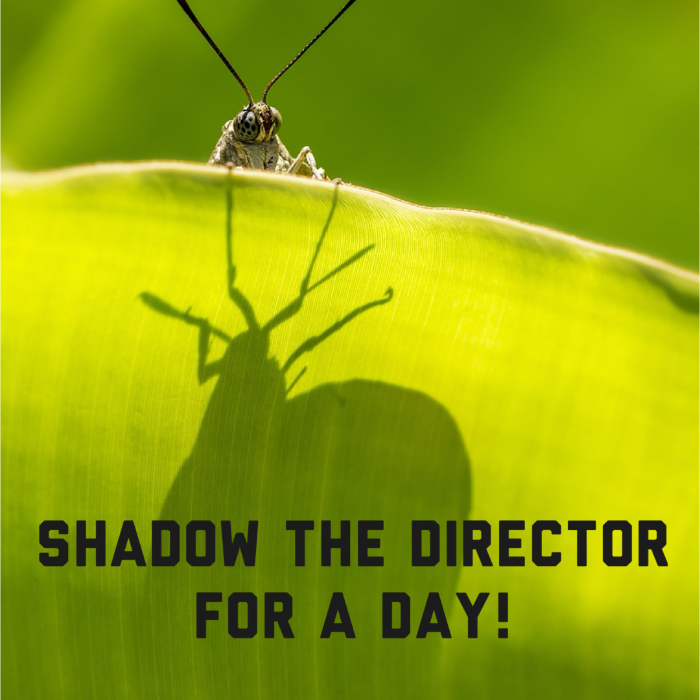
I like when independent filmmakers find ways to include supporters in the creation process. It creates a stronger connection between the audience and the film. There were also some fun and unusual perks. I noticed some rewards included merchandise from other movies, such as posters and even a Home Alone cup, which was a little unexpected but also kind of charming. One perk that caught my attention was "shadow the director for one day". I assume this meant spending time following the director and seeing how the filmmaking process works behind the scenes. For aspiring filmmakers, that kind of experience could probably be very interesting.

https://cdn.images.indiegogo.com/productimage/projects/56010/29135d88-c97a-410e-a213-8b90b0833cd0.png

Written in the Light is not an easy movie, but it is a meaningful one. It is a story about grief, pain and the struggle to find a way forward when life changes forever.

The movie stayed with me after the credits, not because it was trying to shock me, but because it felt honest. Sometimes the most powerful films are the ones that remind us of real human experiences.

A prequel is also in work called Written in the Dark.

https://scontent.farn2-2.fna.fbcdn.net/v/t39.30808-6/745963032_1895365418104902_7099854369599324626_n.jpg?stp=dst-jpg_tt6&cstp=mx1363x2048&ctp=p526x296&_nc_cat=108&ccb=1-7&_nc_sid=833d8c&_nc_ohc=VNpvgTYDfikQ7kNvwGE5OgO&_nc_oc=AdoC7YOvGT32TPyeCiQj7lT-1jMvl1cuq6CV7IbXYih5KW3Ia8Hsqa6OfEIhbIiHqPg&_nc_zt=23&_nc_ht=scontent.farn2-2.fna&_nc_gid=Hbf5G-1AWR_gaT8ykwJyVw&_nc_ss=7b2a8&oh=00_AQCNxueeVR94Mw_BSIErTFFoBOMn01sXRzGSbLXiicmdmQ&oe=6A5D66B4

7/10
For excellent performances and a strong sense of realism from the actors. The emotional struggle feels very believable, making the characters and their pain feel real rather than just like a movie story. I can definitely see this movie being shown in schools as a way to create awareness and start conversations about these difficult subjects.


Links:
IMDB: https://www.imdb.com/title/tt32252459
Original Indigogo: https://www.indiegogo.com/en/projects/heidimikac-37872580/written-in-the-light
Facebook: https://www.facebook.com/profile.php?id=61576241825482


Article written by: Sonny Mikszath